Introduction: Understanding What Is Data Analytics
Imagine this you open Netflix, and it instantly suggests the perfect show — one you didn’t even know you wanted. A few minutes later, Google Maps reroutes you to avoid an unseen traffic jam.
Behind these everyday miracles is something extraordinary: data analytics.
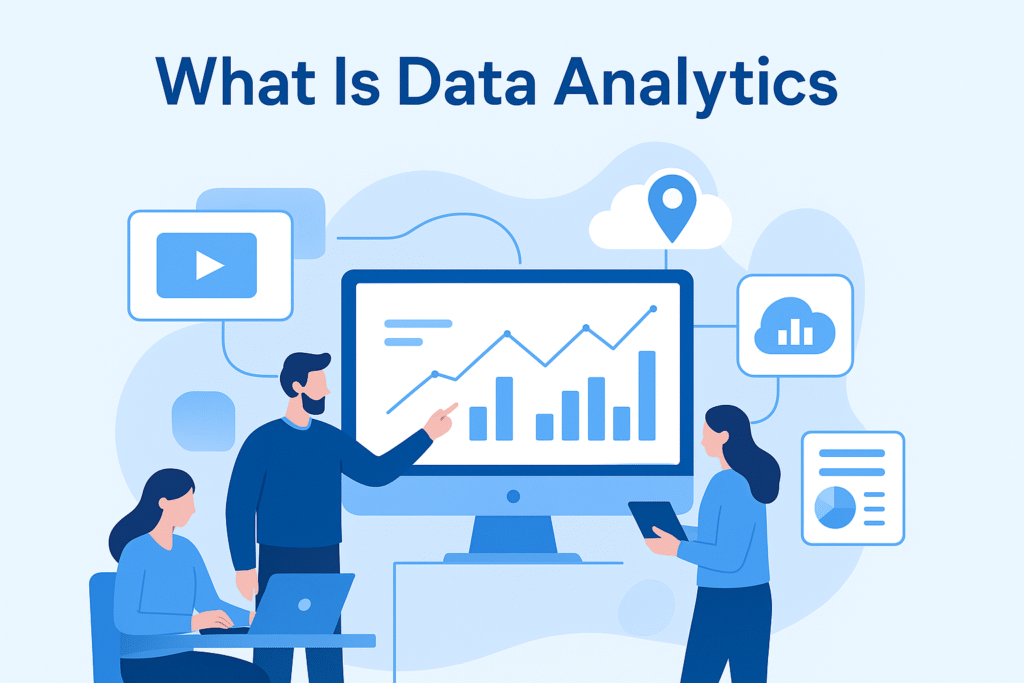
In this article, we’ll explore what is data analytics, how it works, and how it quietly powers the smart, data-driven world we live in.
If you’re just starting your journey, don’t miss The Smart Data Analytics Series — Complete Roadmap for Beginners 2025 — your step-by-step guide to mastering the world of data analytics from the ground up.
What Is Data Analytics? (Definition & Simple Explanation)
Data analytics is the process of gathering, organizing, looking at, and making sense of data to find patterns and information that can help make smarter choices.
In simpler words:
Data analytics helps you figure out what happened, why it happened, and what could happen in the future.
Think of data like raw materials — and analytics as the instructions that turn them into useful and meaningful information.
Types of Data Analytics Explained with Examples
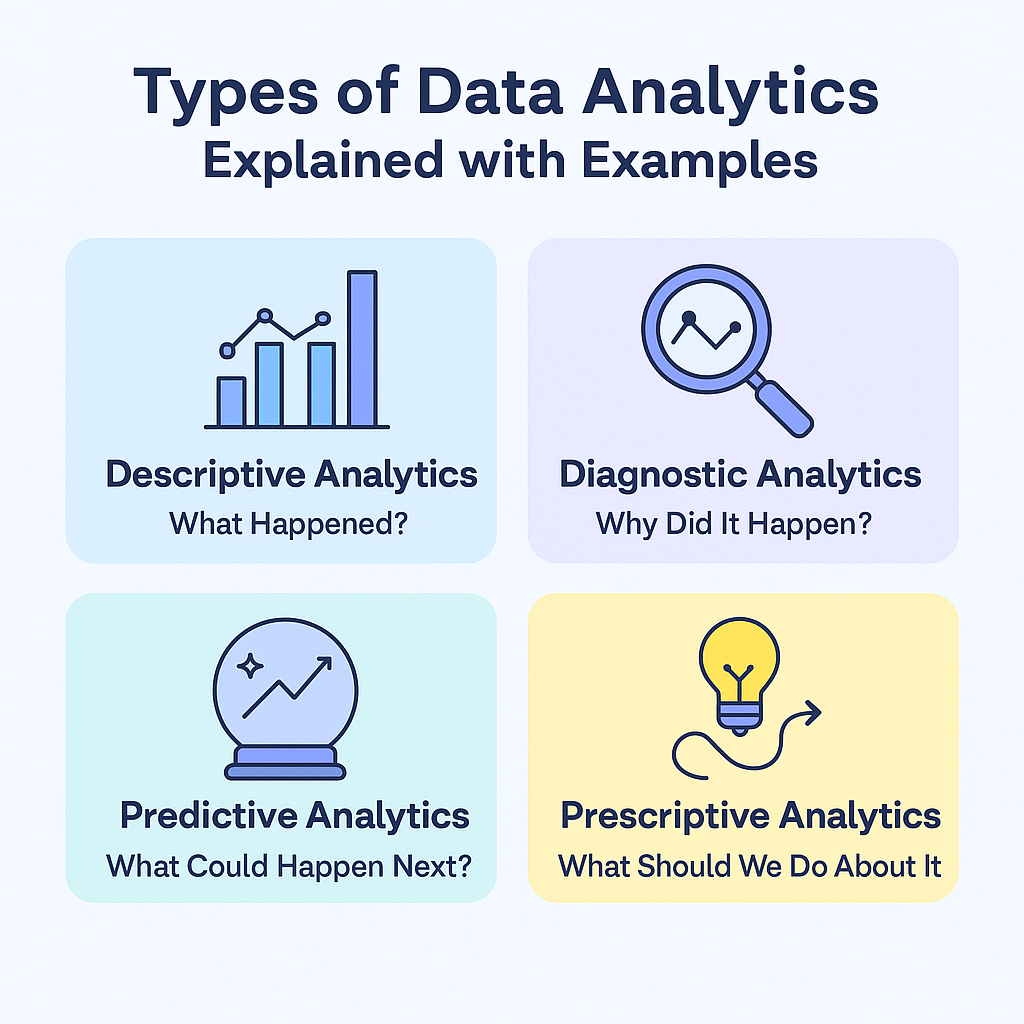
Now that you understand what is data analytics, it’s time to explore its four main types — each serving a unique purpose in uncovering insights from data.
Data analytics is divided into four main types, each answering a different kind of question:
1. Descriptive Analytics — What Happened?
It summarizes past data to show trends or outcomes.
📊 Example:
An e-commerce company analyzes last month’s sales data to find that its “smartwatch” category saw a 40% increase in sales.
2. Diagnostic Analytics — Why Did It Happen?
It looks deeper to understand the reasons behind outcomes.
📉 Example:
The company realizes sales incr Uber uses real-time data to adjust ride peased because a tech influencer reviewed their product, boosting visibility.
3. Predictive Analytics — What Could Happen Next?
It uses past data and machine learning models to forecast future trends.
🔮 Example:
Netflix predicts which shows or movies will trend next based on your viewing history and preferences.
4. Prescriptive Analytics — What Should We Do About It?
It recommends actions to achieve a specific goal.
💡 Example:
rices (surge pricing) and balance demand with available drivers.
The Importance of Data Analytics:
Whether you’re a student, marketer, or business owner, understanding what is data analytics can completely change how you make decisions.
- Enhances Efficiency: Data enables companies to eliminate waste and maximize efficiencies.
- Enhances Customer Experience: Data powers personalization, including recommendations.
- Drives Innovation: Insights drive new products and more effective strategies.
- Supports Evidence-Based Decisions: No more guesswork — only facts.
💼 Example:
Amazon looks at billions of purchases made by customers each day to recommend “Customers who viewed this also purchased” to increase sales and customer satisfaction.
Real-Life Examples of Data Analytics in Action
Now that you understand what is data analytics and how it works, let’s look at how it comes to life in the real world.
Here’s how top brands use data analytics in different industries:
🎬 Netflix: Personalized Recommendations
Netflix uses predictive analytics to recommend shows and movies based on what users have watched. Over 80% of the content people stream comes from these data-driven recommendations.
🏥 Healthcare: Improving Patient Care
Hospitals use data analytics to predict patient readmissions and monitor disease outbreaks. For example, during the COVID-19 pandemic, analytics helped track case surges and allocate medical resources efficiently.
🏢 Marketing: Smarter Campaigns
Brands use Google Analytics to study customer behavior — like which pages users visit or where they drop off — helping marketers improve websites and campaigns.
🚗 Transportation: Traffic & Route Optimization
Google Maps and Uber use live traffic data to recommend the fastest routes and calculate estimated arrival times.
Key Tools Used in Data Analytics
Now that you know what is data analytics and how it shapes real-world decisions, let’s look at the tools that make it all possible.
Behind every dashboard, prediction, or insight, there’s powerful software working quietly to collect, process, and visualize data.
If you’re starting your data analytics journey, here are some tools you’ll encounter:
| Category | Tools | Common Use |
| Data Analysis | Python, R | Analyzing and modeling data |
| Data Storage | SQL, MySQL | Managing databases |
| Visualization | Tableau, Power BI | Creating dashboards and charts |
| Spreadsheet Tools | Excel, Google Sheets | Basic data analysis |
How Data Analytics Shapes Everyday Life
By now, you have a clear idea of what is data analytics and how it helps businesses make smarter decisions.
Even outside big businesses, data analytics impacts our daily lives:
- Spotify creates your “Wrapped” playlist each year using your listening data.
- YouTube suggests videos you might like next.
- Banks detect fraud by analyzing unusual transaction patterns.
- Smartphones analyze battery usage to recommend power-saving settings.
So next time you get a perfect recommendation or alert, you’re seeing data analytics in action!
Conclusion: The Future Belongs to Data
Now you know what is data analytics — it’s not just about numbers or code.
It’s about finding meaning, solving problems, and making smarter decisions in a world overflowing with data.
Whether you’re analyzing sales data, sports stats, or social media trends, data analytics gives you the power to transform raw information into actionable insights.
Stay tuned for Part 2 of The Smart Data Analytics Series — “The Data Analytics Process: From Raw Data to Insight.”